Curated Escapes and Derelict Landscapes in Times of Climate Change (CEDEL)
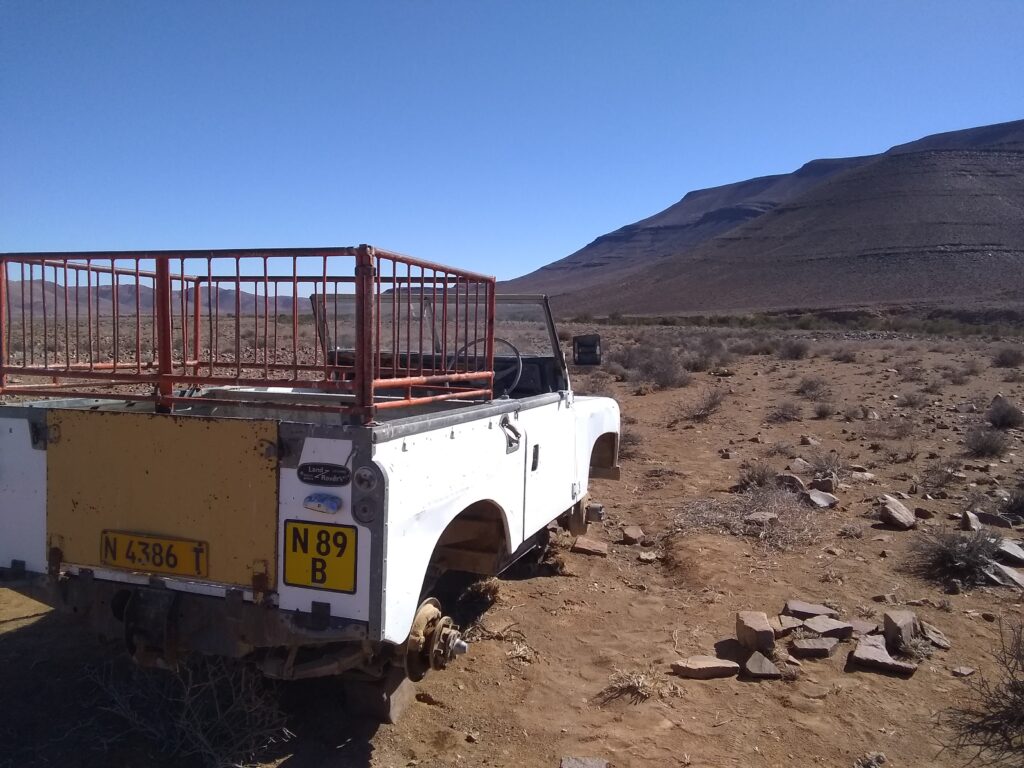
Curated Escapes and Derelict Landscapes in Times of Climate Change investigates where the wealthy are retreating from the consequences of the climate crisis. Far-reaching environmental changes caused by climate change are leading to land degradation. Some areas are becoming increasingly uninhabitable. At the same time, the elite are creating exclusive escapes for themselves, from private islands and wildlife sanctuaries to virtual worlds.
Dramatic ecological shifts not only give rise to „Derelict Landscapes“ where human life can barely subsist; they also lead to the creation of new landscapes—often envisioned and curated by powerful elites as exclusive escapes. These „Curated Escapes“ can take various shapes and serve various purposes. Some of these escapes function as safe havens for the wealthy seeking to flee climate-related distress, temporarily or permanently. These escapes can be located in private luxury wildlife estates or conservation areas in Africa, private islands, or off-grid, self-contained refuge in Antarctica, with some even aspiring for outer space. Alternatively, curated escapes can also be visions for saving entire populations fleeing rising sea levels or environmental collapses, such as the establishment of a new partly-virtual nation of Tuvalu. This ground-breaking project will show that such curated escapes are not only elite fantasies. Rather, they need to be understood alongside land that is defined as—or will soon be— uninhabitable. Such derelict landscapes include: islands facing imminent flooding, such as the coast of Sierra Leone; areas becoming simply too hot to sustain livelihoods; or areas facing other environmental issues like desertification or biodiversity loss, such as parts of southern Africa or Alpine valleys in Switzerland. While increasing expanses of land are being declared—whether scientifically or merely rhetorically—derelict, not all of these landscapes will be completely uninhabitable, and some of them are being targeted as curated escapes for the elite.
The project investigates the long-standing political and ecological histories of both the creation and the curation of landscapes for elite escape in a number of selected sites, and it investigates how areas are rhetorically defined as inhospitable. This historicises curated escapes and the rhetoric of derelict landscapes, revealing how each is rooted in longstanding, racialised ideologies of settler colonialism, apartheid, and capitalist custodianship. Colonial aesthetics and imaginaries of nature shape contemporary manifestations and aspirations of elite escape, which were often made real through colonial and capitalist dispossessions. The project proposes that systematically investigating the relationships between curated escapes and derelict landscapes—in the context of past experiments, present endeavours, and future aspirations— can challenge established concepts of territory, statehood, and land rights in the Anthropocene. Through formulating a comprehensive understanding of curated escapes, their historical roots, and their implications for populations facing climate catastrophe, this ambitious project develops novel and innovative methods and concepts relevant to several scholarly disciplines. The project employs a bold interdisciplinary approach—involving environmental humanities, political ecology, environmental history, and African Studies—which positions it well to understand (1) the dynamics of appropriating land and nature by defining it as uninhabitable for some, while turning it into luxury escapes for others, and (2) the establishment of new, curated escapes intended to save parts of the population from collapsing environments. Researching past, present and future curated escapes and derelict landscapes not only challenges disciplinary and temporal boundaries, but it also contributes to two of the most pressing societal issues: climate change and social inequality.
Subprojects:
A) Already established escapes, such as eco-estates and private conservation areas Namibia and South Africa (and probably Switzerland)
B) The emergence of ‘derelict islands’, both allegedly sinking islands (Chagos, UK/Mauritius), and islands actually being flooded (Sierra Leone).
C) Aspirational cases, include the exclusive escapes in Antarctica, the digital clone of the sinking island nation of Tuvalu and concepts of fallow lands / rewilding in Switzerland.
Project ID: SNF Starting Grant 2025-2030
Start Date: 01 September 2025
Duration: 2025-2030
Team:
Prof Dr Luregn Lenggenhager, Historian (Assistant Professor, Principal Investigator)
Dr Bernard C. Moore, Historian (Postdoc)
Angelinah Maponya, PhD candidate
Bayron van Wyk, PhD candidate
Sophie Zimdars, PhD candidate
Vacant, (Student assistant)